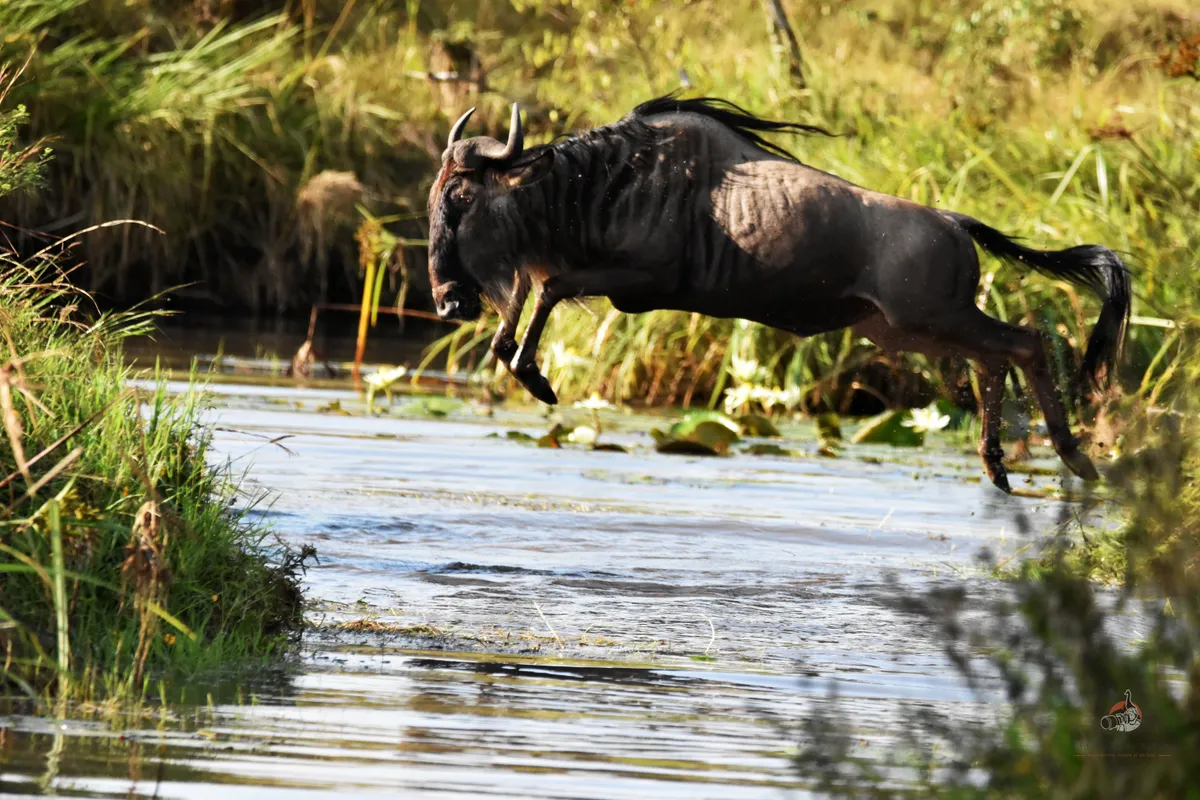
Calving Season in Ngorongoro Conservation Area
The ultimate Calving Season experience in Tanzania is an opportunity for you to dive deeper into the migration patterns. Spend days exploring and learning more about the incredible migration of the Gnu species and their life cycle. Get a chance to witness the new borns and vast numbers of wildlife feeding on the rich nutritional grass in the lush green plains. This is also the predator season as they are active and sharp to catch the young ones offguard.
Calving Season in Ngorongoro Conservation Area
· WILDEBEEST (connotates taurinus)
· Subfamily Alcelaphinae/Tribe Alcelaphini
· Total Length:2.4-3.3m; tail length 45-100cm
· Weight: male (170-250kg), female (180-215kg)
· Longevity: 12-19 years in the wild, 24 years 3 months in captivity
· Identification pointers*: Forequarters higher, much heavier than hindquarters; overall colour dark grey, some brown, slightly darker vertical striping on neck and chest; long head, broad snout; horns both sexes, superficially Buffalo-like but much
lighter.
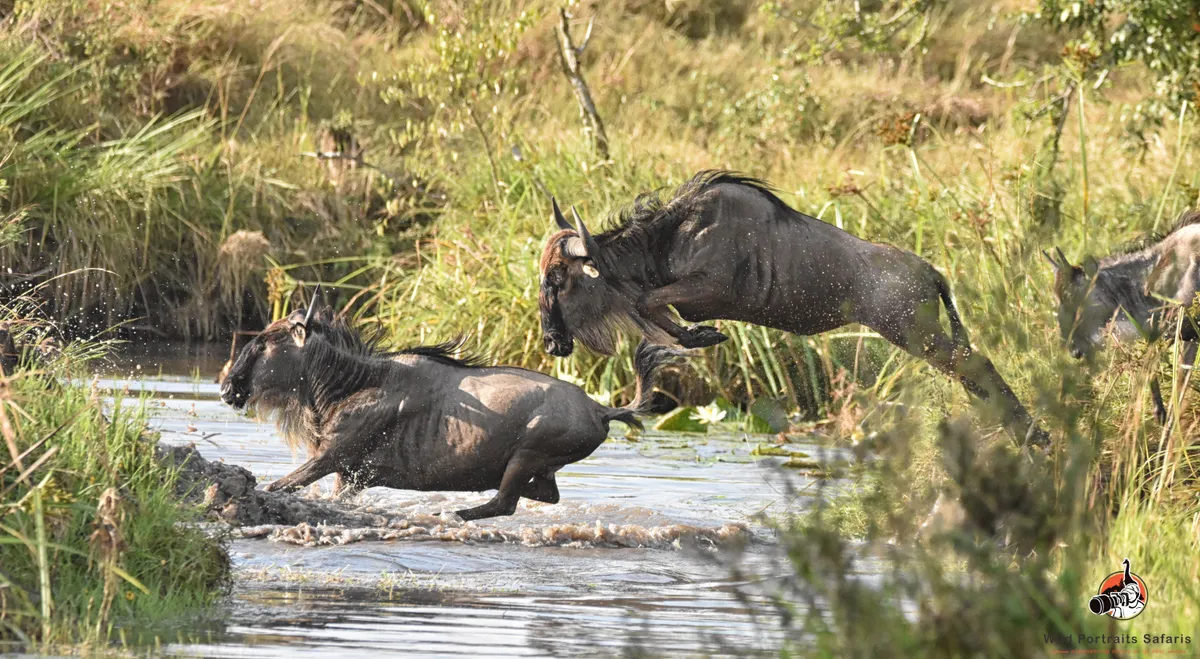 The great migration of the Western white-bearded wildebeest
Distribution
There are five separate populations of wildebeests
- The Blue Wildebeest of southern Africa, south-western central Africa;
- The totally isolated Cookson’s Wildebeest which is concentrated along the Luangwa Valley of eastern Zambia;
- The two white-bearded races of East Africa that have their northernmost range in southern Kenya-the Western White-bearded, in the Serengeti ecosystem, and the Eastern White-bearded, centred on the Maasai Plains of north-east Tanzania and adjacent Kenya;
- The Johnston’s (Nyasa) Wildebeest occurs north from the Mozambique/Tanzania border into the Selous ecosystem.
Status
The Western race of the White-bearded is one of Africa’s most abundant antelope, with an estimated 1.5 million animals, the vast majority of which are centred on the Serengeti/Masai Mara/Ngorongoro system. The Eastern White-bearded numbers possibly 8,000, but is in under pressure outside parks.
Food, Habitat and Behaviour
The Wildebeests are grazers showing a preference for short green grass. They prefer open grassland savanna and savanna woodland; access to drinking water is essential for them. They occur in herds of up to 30 individuals, but much larger concentration may be seen, numbering tens and even hundreds of thousands. One of the world’s greatest land migrations involves the movement of more than 1.2 million Western White-bearded Wildebeest in a circuit between feeding and watering grounds within the Serengeti ecosystem of East Africa. Territorial bulls defend a zone around the cows, even when on the move, indicating that it is not the ground that is defended but the right of access to receptive females. Aterritorial bull may control 2-150 cows with their accompanying young.
Calving Season
The migration takes place due to climate change and unpredictable rainfall patterns. Rainfall is the motivator for the greatest large-mammal migration on Earth, as herds move to feed on fresh grass as a result from the rains. Apart from the more than 1 million Western White-bearded Wildebeest that participate in this annual event, there are vast numbers of plains Zebra and Thomson’s Gazelles.
With the onset of the short rains in November, the massed herds start moving southwards away from the Maasai Mara in Kenya down to the Serengeti plains in the south and the adjacent Ngorongoro Conservation Area in December.
January to March
The wildebeest calving season takes place primarily in the Southern Serengeti and the Ndutu area, which is within the Ngorongoro Conservation Area. Expect temperatures from a high of 76°F (25°C) to a low of 56°F (14°C). These areas are ideal calving grounds because of their vast, open plains and the nutrient-rich grass that nourishes both mothers and calves. The Crater volcanic soils are rich in nutrients including phosphorus, potassium, calcium, magnesium, and iron that offers the best conditions for raising their newborn calves. During this period over 400,000 calves are born here within a period of two to three weeks, or nearly 8,000 new calves every day. A single calf weighs 22kg (14-25kg) is born after a gestation period of approximately 250 days. The calf is able to run with the mother just a few minutes after birth. The abundance of vulnerable young calves means the surrounding predators also spring into action, hunting with ease due to the sheer numbers of wildebeest. By April the southern plains begin drying out and the great herds are forced to move towards central and western Serengeti. During migration in May to June mating gets into full swing, with bulls trying to control and breed with receptive cows. The herds move northwards in July to the western corridor, crosses the Grumeti River and move northwards crossing the Mara River large numbers that cross the river are either hunted by Nile crocodiles or drown. Once the short rains start in November the herds return and the breeding cycle is repeated.
The Great Migration (July through October) is the time of big headlines and lots of tourists and the parks will be gridlocked. You’ll have the park all to yourself… that is, you and the infinite wildlife and their young filling the Serengeti. The beauty of the calving season and the drama of big cats and other predators on the hunt. Contact us and let us tailor-make your unforgettable Calving Safari.