UNVEILING THE MAJESTY OF LAKE NAKURU NATIONAL PARK
Join us as we dive deeper to the mavels and conservation efforts of Lake Nakuru National Park an awe inspiring park covering 188km2. The park is dominated by the soda lake which is surrounded by acacia woodlands, grasslands, and the Baboon Cliffs.
UNVEILING THE MAJESTY OF LAKE NAKURU NATIONAL PARK
 ## By Wild Portraits Safaris
One of my childhood fascinations revolved around watching TV programs on wild animals and reading documented literature on these animals in their natural habitats. Lions, elephants, and giraffes were particularly fascinating to watch, though the perception then was that the animals were merely fiction since they seemed so large compared to the dogs and cats living amongst us in the neighbourhood. But this perception suddenly changed when I visited the Lake Nakuru National Park in Kenya, where I came alive to the fact that these animals are real and inherently beautiful.
Beyond the main attractions, what hidden gems and lesser-known corners await discovery within the park?
Geology and Landscape:
Lake Nakuru National Park lies 156km from Nairobi. The park has Nakuru City at its fringe. It covers 188km2 one-third of it is taken up by the lake when full and lies at an altitude of 1,754m asl. Nakuru lies between the Aberdare in the east and the Mau escarpment in the west and is dominated by the soda lake and an escarpment known as Baboon Cliffs to the east of the Road.
Lake Nakuru catchment basin is a closed drainage system, without outlets, covering some 1,800km2. The Lake is fed by the Makalia, Njoro and Enderit rivers. The lake itself is small, shallow, and has alkaline-saline water that once covered a much larger area, estimated 700km2, and incorporated the lakes Elementaita and Naivasha.
Wildlife:
The park has one of the densest Defassa Waterbuck Population in Kenya. It is a uniquely rewarding game-viewing destination which is also home for over 500 species of birds, an incredible diversity of mammals and a successful sanctuary for both the endangered black rhinos and white rhinos. The park hosts 4 members of the big five (Lions, Rhinos, Buffaloes and Leopards), the park is also home to other species like the Giraffes, Hippos, Warthogs, Vervet monkeys, Olive baboons, Colobus monkeys and many more Lions that climb trees? What unique behaviours might you encounter in the diverse habitats of Nakuru?
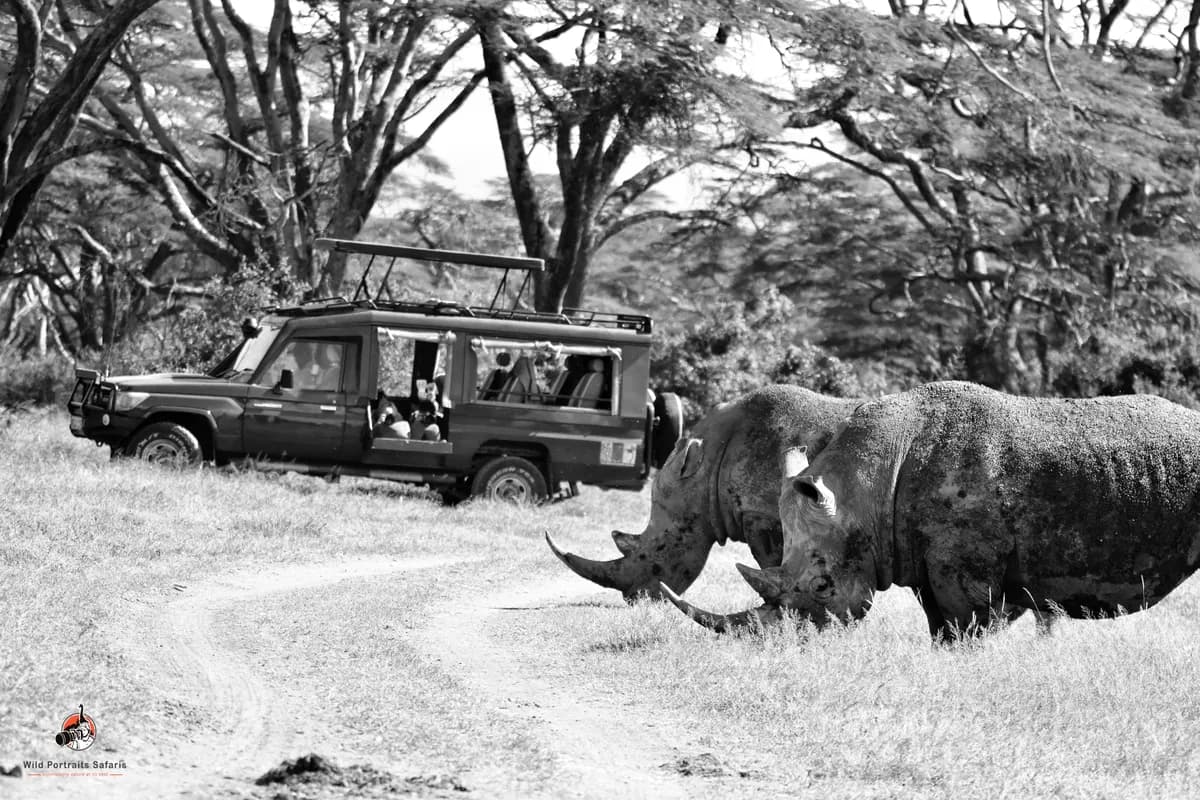
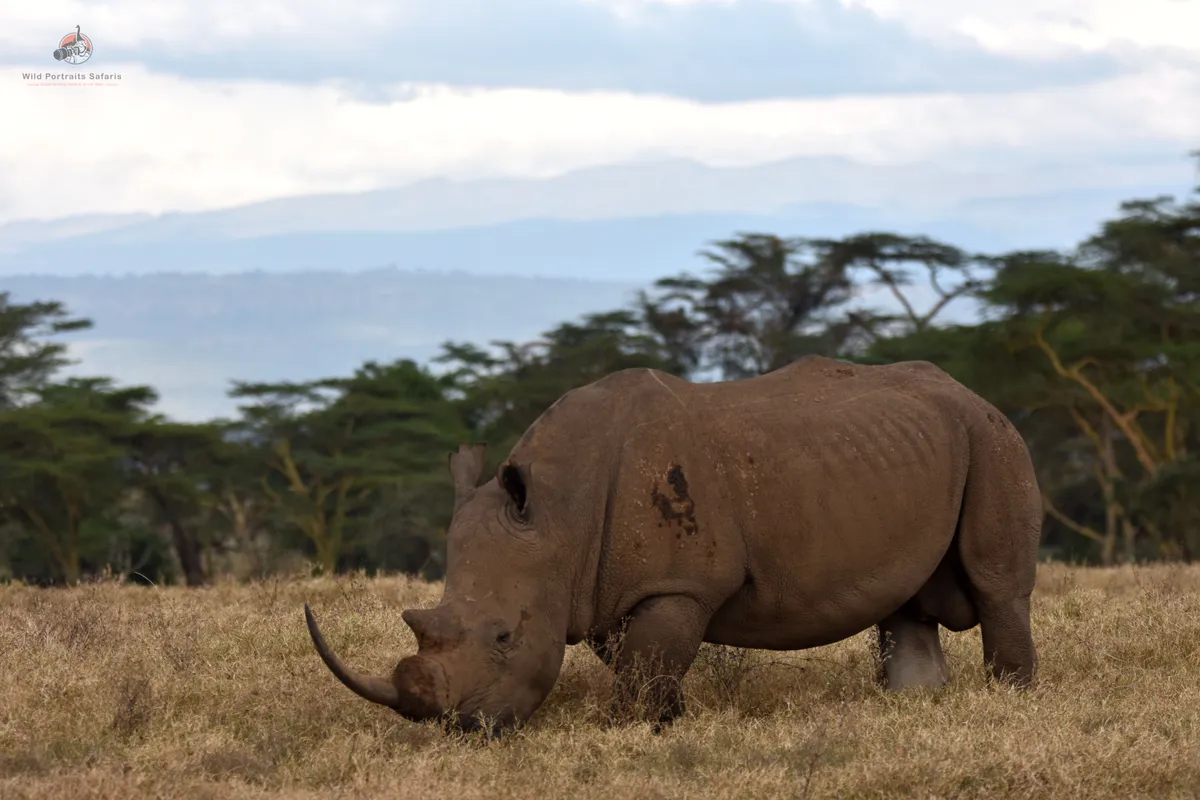
This is an important park for the conservation of both Hook-lipped (Black)Rhinoceros and Square-Lipped (White) Rhinoceros (introduced from South Africa). The park's dedicated rhino enclosure, established in 1984, provides a secure environment for these endangered species, and by 2025, the population continues to thrive, making Nakuru one of the best places in Kenya to spot them.
The Black Rhino identification pointers: Large in size, no hump on neck, pointed upper lip; two horns on face; head held well above the ground; shrub, tree habitat. Once occurred throughout the central, southern and eastern Africa where habitat was suitable but they were highly poached and by 1960 the range had shrunk dramatically. The Black Rhino requires areas with shrubs and trees to provide both food and shade. Solitary, although groups may gather temporarily at waterholes and locations with mineral-rich soils. The single calf may accompany the cow for 2-4 years, until the cow’s next pregnancy, or birth of the next calf. Their longevity is probably 40-50 years in the wild.
Square-lipped (White) Rhinoceros
Identification pointers large size; broad, square muzzle, large head carried low; hump on neck, large pointed ears, two horns on face. It is noticeably larger than the Hook-lipped Rhinoceros. Shows a distinct preference for areas of short-grass savanna, with access to thick bush cover for shade, water for drinking and wallowing. More social than the Hook-lipped, with typical groupings consisting of a territorial bull, subordinate bulls, cows and their accompanying young. Selective grazers, showing a distinct preference for short grass species. Longevity is 40-50 years.
What to do in the park:
I know some of you might have this question, what are my primary interests? at the back of their minds then here you go.
Lake Nakuru offers visitors a variety of ways to experience its beauty:
- Game Drives: Explore the park's network of roads, offering excellent opportunities to spot the diverse wildlife. Early morning and late afternoon drives are particularly rewarding.
- Bird Watching: With over 450 recorded bird species, including migratory birds, Lake Nakuru remains a paradise for ornithologists and casual bird enthusiasts alike.
- Baboon Cliff: This iconic viewpoint provides panoramic vistas of the lake and the surrounding acacia forests, perfect for photography and soaking in the scenery. Ask yourself what kind of memories would you create while witnessing a breathtaking sunset over Lake Nakuru from Baboon Cliff?
- Makalia Falls: Discover the picturesque Makalia Falls within the park, a tranquil spot to enjoy the natural beauty.
- Walking Safaris and Horseback Riding: For a more immersive experience, guided walking safaris and horseback riding excursions offer a different perspective of the park's flora and fauna.
- Picnicking: Enjoy a meal amidst nature at designated picnic sites within the park.
The park's landscape is equally captivating, ranging from the alkaline lake and its shores to rolling grasslands, acacia woodlands, and rocky escarpments. The panoramic views from Lion Hill and Baboon Cliff are particularly breathtaking.
History or cultural significance:
Excavations at Hyrax near Nakuru shown that seasonal and permanent human settlements were present at least 3,000 years before present with more indication of Iron-Age burial pits and various stone structures. It is likely that the lakeshore was occupied at least 30,000 years before present by the Eburran people, with recent settlers being the Maasai. The park was proclaimed in 1968 with the main intention of protecting the large numbers of Flamingos. In 1974 the park was expanded to include more of the surrounding savannah. Its name is derived from the Maa language, en akuro, which translates to ‘swirling dust’ a reference to the clouds of fine dust that are raised around the lake’s edge when the wind blows.
Conservation in Action and Current Challenges:
Managed by the Kenya Wildlife Service (KWS), Lake Nakuru National Park prioritizes conservation efforts. The success of the Rhino Sanctuary which was the first Rhino Sanctuary to be established in Kenya is a testament to these initiatives, which include anti-poaching patrols and habitat management. The park's fencing plays a crucial role in protecting wildlife from human-wildlife conflict.
However, the park continues to face ecological challenges. The fluctuating water levels of Lake Nakuru, influenced by climate change and changes in land use within the catchment area, remain a concern. The increased water has, in the past, led to the submersion of infrastructure, including the main gate, and altered the habitat. While the situation is being monitored, adapting to these changes and ensuring the long-term ecological balance of the park remains a priority. Efforts are also underway to address potential pollution from nearby urban areas to safeguard the lake's delicate ecosystem.
Climate:
The area is classified as dry sub-humid to semi-arid with a warm and temperate climate. March is the hottest month and July the coldest but there is only 20 C difference between the averages. Rain falls mainly during the winter months (April to August) with an annual average of 895mm, with lowest falls December to February.
Best time to visit:
The months that are most popular for the tourist visits the Park are January, February, March, June, July, August, September and October this is because these are the driest months of the year, so your tour and game drives are more lucrative and enjoyable.
How to get there:
Lake Nakuru National Park is easily accessible by road from Nairobi, making it a popular destination for day trips or as part of a larger Kenyan safari itinerary. Accommodation options are available both inside and outside the park, catering to various budgets and preferences. Entry fees of 90$ per person Adult and 45$ for child3yrs and above 1-2yrs is free of charge. Park fees vary depending on residency status, with updated rates for 2026 available online and at the park gates. Payment is often facilitated through electronic means like Mpesa and credit cards.
Conclusion:
Despite the dynamic environmental conditions, Lake Nakuru National Park stands as a testament to the resilience of nature and the ongoing commitment to wildlife conservation in Kenya. Its breathtaking beauty, diverse wildlife, and significant role in protecting endangered species continue to draw visitors from around the globe, offering an unforgettable glimpse into the heart of East Africa's natural wonders. As the park adapts to the changing rhythms of the lake, its importance as a vital ecological sanctuary remains unwavering.
Here is something to juggle you mind; Beyond the main attractions, what hidden gems and lesser-known corners await your discovery within the park?